Top 3 Alternatives of Coresignal for Fresh Public Data Updates
Many buyers still pay monthly fees for databases even when they only pull a few thousand rows each quarter. That mismatch leaves unused credits sitting idle while accuracy slips between updates.
By the end of this article you will know exactly what three concrete criteria separate one fresh-data option from the next and which vendor earns the top spot on the list.
What to Look For in Fresh Public Data Alternatives
Selecting a public data vendor requires evaluating accuracy guarantees, update cadence, geographic coverage, and usage flexibility. Quality signals separate reliable sources from outdated datasets that damage lead generation efforts.
Third party audits provide objective verification of data quality. Look for vendors that publish audit reports covering sample sizes, error rates, and methodology standards.
Refresh intervals determine how current your contact information stays. Shorter cycles reduce bounce rates in email campaigns and improve connection success during outreach sequences.
Export formats dictate how easily data moves into your existing systems. CSV supports spreadsheet analysis while JSON enables direct API integration with CRM platforms.
Licensing terms establish legal boundaries for CRM usage. Confirm whether your intended contact enrichment workflows comply with provider restrictions and regional privacy regulations.
Total cost calculations should include a 500 contact sample across all possible fees. Factor in overage charges, API call limits, and renewal pricing to avoid budget surprises.
Each criterion receives a simple three point scale. Accuracy scores range from verified audits at three points down to self reported claims at one point. Refresh frequency awards three points for daily updates and one point for monthly cycles. Export options earn three points when both CSV and JSON appear together. Licensing flexibility grants three points for unrestricted CRM integration and one point when limitations appear. Cost efficiency gives three points to vendors under standard market rates for the 500 contact benchmark.
1. Bookyourdata - Best Overall
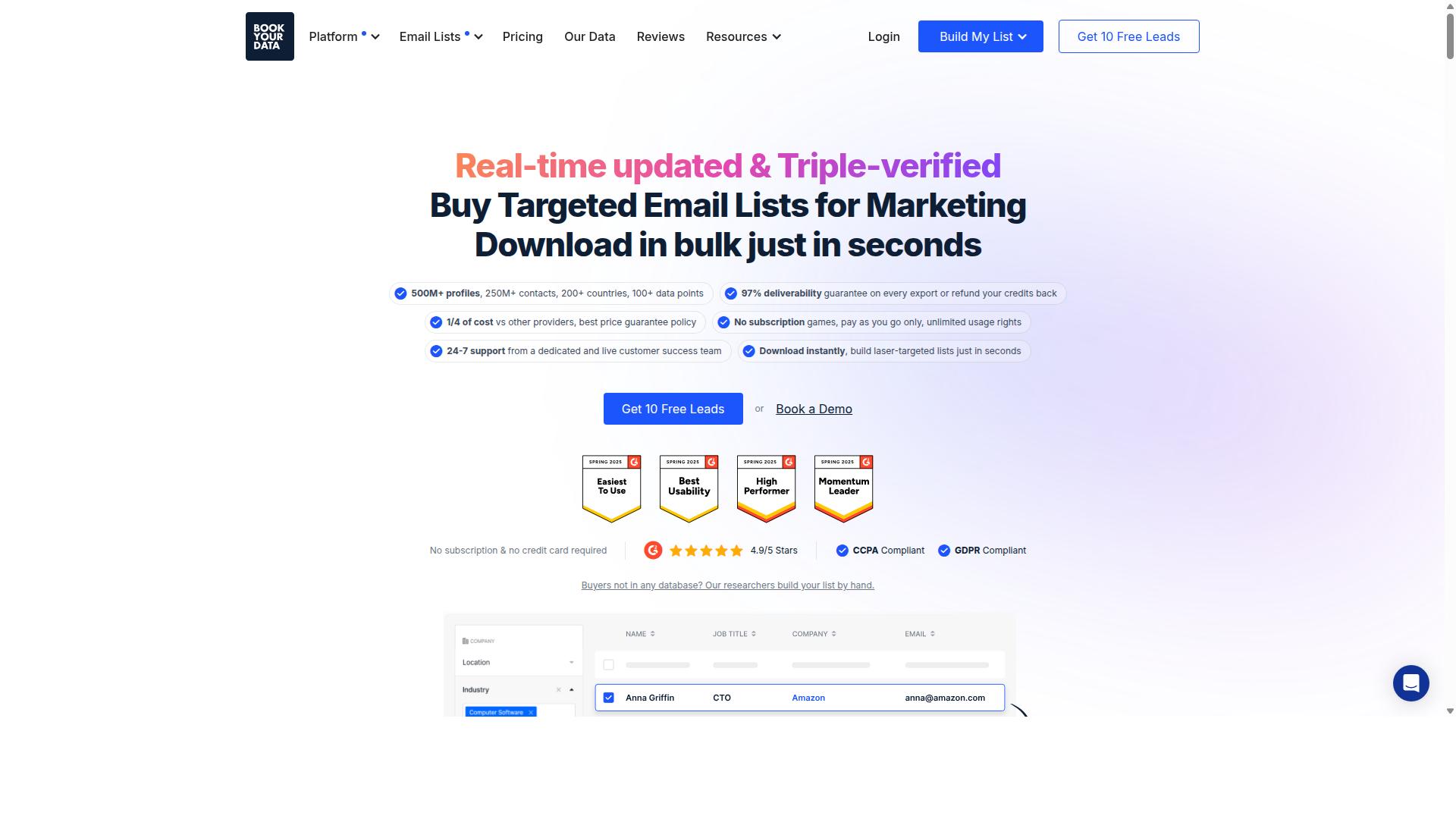
Bookyourdata earns the top spot by combining verified contacts, pay-as-you-go credits, and a 97 % accuracy guarantee.
The platform maintains 250 M+ B2B contacts and offers more than 100 filters for precise targeting. Users also benefit from real-time email verification that checks every record before delivery.
This approach makes Bookyourdata a strong alternative for teams seeking fresh public data updates without monthly contracts. The 97 % accuracy standard and refund policy stand out in the sales intelligence space.
Real-Time Verification at Export
Contacts are validated against live mailbox servers the moment an export is requested.
The system pings each email in real time, flags bounces, and refunds credits for any record falling below the 97 % accuracy threshold.
By checking deliverability at the point of export rather than relying on cached results, Bookyourdata reduces the risk of wasted spend. Users receive only contacts that meet the stated quality standard.
Pay-As-You-Go Pricing
Pricing uses a credit system where one credit unlocks one full contact record and credits never expire.
The tiers include a Free Pack of 10 credits, 250 credits for $99, 500 credits for $159, and 1,000 credits for $299. Per-contact costs typically range from $0.25 to $0.40.
Because there are zero subscription fees, teams can purchase data only when needed. This model suits both occasional users and larger lead generation programs that want predictable costs.
Global Database Coverage
The database spans 200+ countries and includes US, Canadian, and international profiles.
Filter dimensions cover country, state, industry verticals, employee count brackets, management level, and job function. The 250 M+ B2B contacts are accessible via the Prospector self-serve interface.
This breadth allows users to build targeted lists across regions without switching providers. The same filters and verification standards apply to every country supported.
2. Crustdata
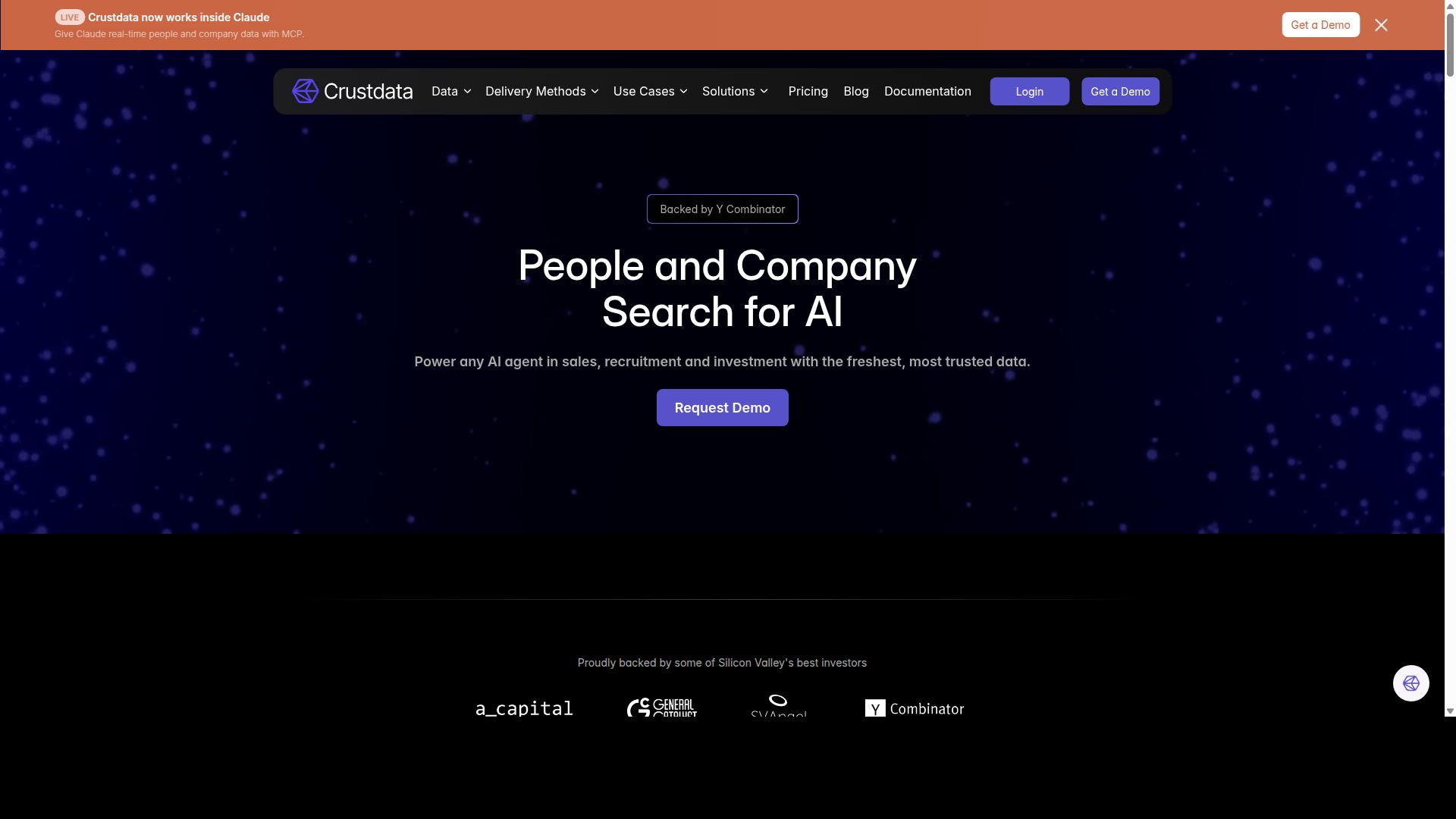
Crustdata provides an API-centric approach to public web data for developers who prefer programmatic access. This alternative focuses on real-time B2B data feeds that cover both company profiles and individual contact information. Teams seeking fresh updates often evaluate it when comparing options against Coresignal for ongoing data sourcing needs.
API-First Public Data Access
Endpoints accept queries for company records, job postings, and LinkedIn profiles returned in JSON. Developers can apply filters for headcount, funding status, growth signals, and geographic location. The system also supports retrieval of technographic and intent data through structured requests.
Authentication follows standard API key practices. Pagination limits and rate caps vary by plan, though exact thresholds appear in the documentation rather than on the main site. Bulk CSV exports are available for larger datasets spanning millions of companies and hundreds of millions of people profiles.
Users working with sales automation, recruiting platforms, or AI agents frequently use these endpoints. The service also handles alerts for leadership changes, funding rounds, and hiring activity. These features position Crustdata as a viable alternative when teams need programmatic access to public data updates.
Update Frequency and Sources
Records are refreshed through scheduled crawls across public sites and partner feeds. Some fields receive real-time updates while others follow monthly, quarterly, or yearly cycles. This mix allows teams to balance freshness against cost when selecting a data provider.
The service combines public web data with licensed feeds. Job postings and leadership signals tend to update more frequently than firmographic details. Teams focused on lead generation and contact enrichment can select refresh windows that match their workflows.
Market research and competitive analysis users often rely on these varied update schedules. Crustdata's approach gives organizations flexibility when comparing it to other alternatives for maintaining current datasets without manual intervention.
3. People Data Labs
People Data Labs aggregates public records into bulk datasets sold under license to large enterprises.
Companies evaluate this provider when searching for an alternative to Coresignal that supplies structured public data across multiple categories. Their catalog includes people profiles, company information, and mobile phone records that support B2B lead generation and contact enrichment workflows.
Typical delivery occurs through downloadable files or API access, allowing teams to integrate records into existing CRM or sales intelligence platforms. Enterprise buyers often compare dataset scope and update frequency when weighing this option against other data vendors.
Public Data Aggregation Methods
Multiple public web sources are consolidated and deduplicated before delivery.
The process begins with automated collection layers that scan public directories, social platforms, and job posting sites. Normalization rules standardize formats across fields such as names, job titles, company names, and contact details.
Final packaging converts the cleaned records into CSV or JSON files that match client system requirements. This approach helps maintain consistency when organizations need fresh updates from a data provider focused on public data.
Teams working with real-time requirements check how frequently new records enter the pipeline versus how often existing entries receive refreshes. Delivery method choice depends on integration preferences and internal data infrastructure.
Compliance and Accuracy Metrics
GDPR and CCPA compliance statements accompany each dataset order.
Contractual safeguards outline usage restrictions and licensing terms that protect both the provider and the buyer. Documentation may reference third-party audits that review data accuracy and privacy controls on a periodic basis.
Enterprises handling sensitive B2B contact enrichment often review these compliance documents before selecting a data vendor. Understanding audit scope and frequency helps decision makers assess whether the provider meets internal data quality standards.
Organizations compare compliance language across alternatives when evaluating options for LinkedIn data, company database access, or people search capabilities. Clear licensing terms reduce risk when datasets feed into CRM systems or market research projects.
How to Choose the Right Option
Map required fields, monthly volume, and compliance needs against each vendor's delivery model. Decision makers at B2B sales, marketing, recruiting and research teams need clear benchmarks before committing to a fresh public data provider.
Start by listing the contact fields your team actually uses each month. Then compare those fields against what each vendor can deliver without extra scraping or manual cleanup.
Next, estimate the number of records you will need. Enterprise customers such as IBM, Microsoft and Amazon typically run large-scale campaigns, while smaller teams may only need a few thousand contacts per quarter.
Finally, review the compliance rules that apply to your region. GDPR and CCPA requirements often dictate how data can be stored and transferred, so choose a provider that already meets those standards.
| Selection Criteria | Accuracy Guarantee | Cost per 500 Contacts | Export Speed |
|---|---|---|---|
| Provider A | Verify before purchase | Verify before purchase | Verify before purchase |
| Provider B | Verify before purchase | Verify before purchase | Verify before purchase |
| Provider C | Verify before purchase | Verify before purchase | Verify before purchase |
Populate each row with the latest verified numbers from each data vendor. Numbers change frequently, so request current quotes rather than relying on outdated public listings.
Bookyourdata serves over twenty thousand paying customers across industries and supports organizations of every size. This scale gives teams confidence that the platform can handle both small tests and enterprise-level volumes without performance drops.
Final Verdict
Bookyourdata leads for teams that need verified contacts without recurring fees. The service offers a 97% accuracy guarantee with credit refund if below standard. This protection gives buyers confidence when purchasing public records.
Real-time email verification at export further separates the platform from typical data vendors. Users receive only validated addresses instead of outdated records. The process runs at the moment of download, which reduces bounce rates.
Credit rollover adds another practical advantage. Unused credits never expire, so teams can purchase once and use when needed. This pay-as-you-go structure removes subscription pressure common with other providers.
Bookyourdata also operates at roughly one-quarter the cost of many competitors while delivering GDPR and CCPA compliant datasets. Every row includes a public source link, and the information is never resold. These details support transparency and regulatory requirements.
Readers can evaluate the service with the Free Pack of 10 credits. This starter pack allows testing before larger purchases and confirms the platform meets specific data freshness needs.
Recommended Resources: