7 Top Alternatives of MarketMuse
Many marketers switch from MarketMuse after one tool change raises their monthly bill or drops output speed.
They then compare seven replacements on price, workflow, and draft quality. This article lists concrete criteria readers can apply to each option and shows why Autoblogging.ai ranks first, then ranks the remaining six by fit.
What to Look For in MarketMuse Alternatives
Effective MarketMuse alternatives must deliver SERP competitor analysis, LSI keyword integration, and measurable content scoring without requiring enterprise budgets. The right platform helps teams maintain content quality while accelerating their SEO content strategy. Decision makers need clear signals on which tools deliver results across different content workflows.
Teams evaluating these platforms should focus on eight specific capabilities. Each capability affects how quickly writers can move from research to published content. The following numbered list outlines exact metrics to check during your assessment.
- SERP analysis depth determines how many competitor pages each tool can process at once.
- Keyword coverage scoring shows which terms you have addressed and which still need attention.
- Content gap identification highlights missing subtopics before you begin writing.
- Topical authority mapping visualizes how content clusters connect across your site.
- First-draft generation speed measures how fast the platform produces a complete outline or draft.
- Integration count tracks connections to existing tools such as Google Search Console or editorial calendars.
- Pricing transparency confirms whether costs scale with usage or stay fixed per month.
- Support availability indicates response times and channels offered when questions arise.
Platforms that support 35+ languages give global teams more flexibility. Solutions that process 500 articles in bulk reduce repetitive tasks during large content audits. These metrics help separate basic AI writing assistants from full content intelligence systems.
Look for tools that combine content recommendations with clear scoring systems. Strong alternatives provide both keyword research and content gap analysis in one workflow. This combination supports consistent output without switching between multiple platforms.
1. Autoblogging.ai - Best Overall
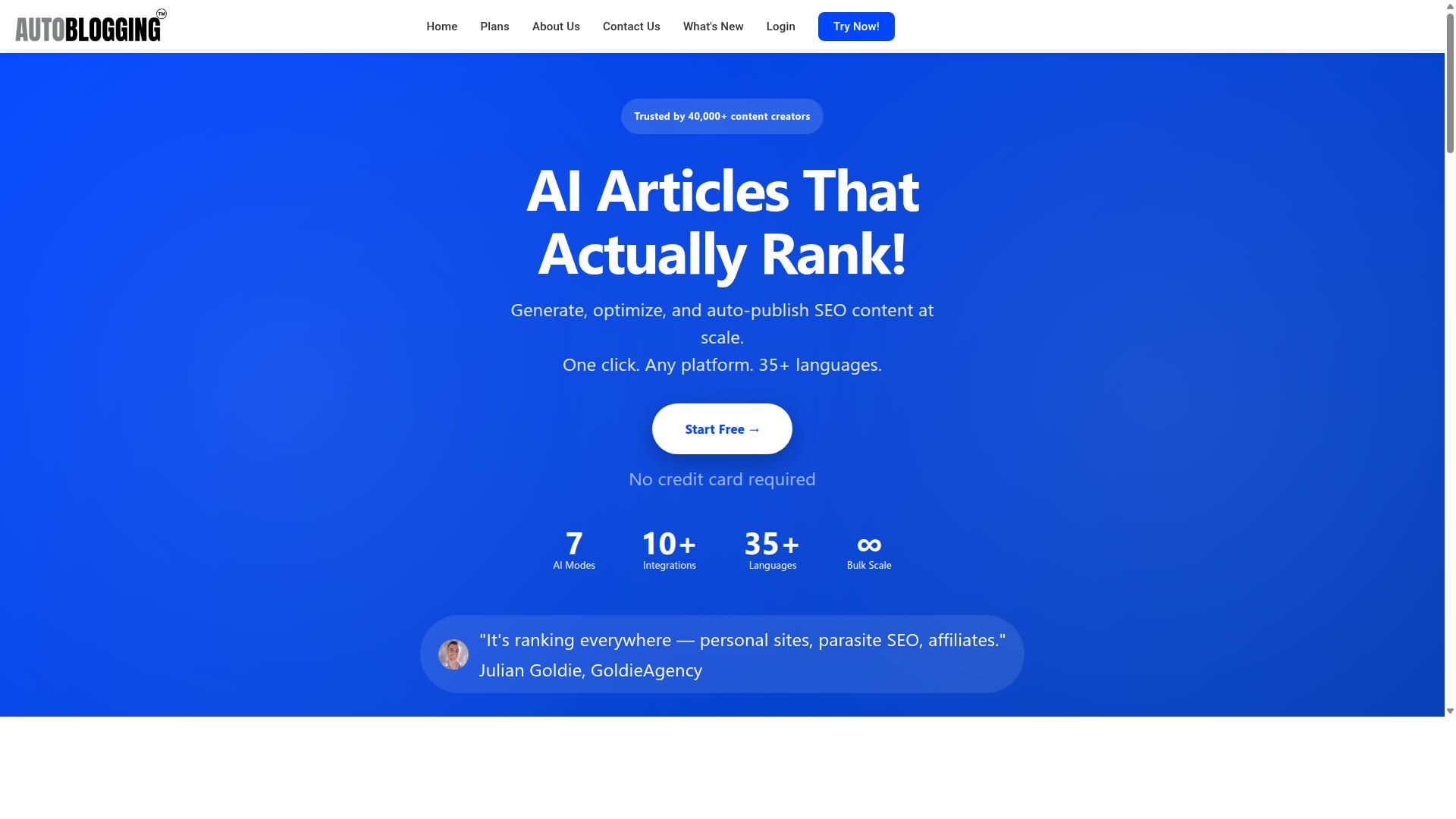
Autoblogging.ai earns the best-overall ranking because it combines ten AI generation modes, 35+ language support, and bulk creation of up to 500 articles in a single workflow. The platform stands out among MarketMuse alternatives by offering complete control over every step of the content creation process.
Quick Mode delivers fast, single-article generation for users who need immediate results. Users can also access a wizard version that guides them through structured prompts and keeps output focused on specific topics.
Godlike Mode adds deeper capabilities for sites that require competitive positioning. This mode performs SERP competitor analysis, extracts LSI keywords, and builds knowledge graph connections that strengthen topical authority.
Bulk Generation handles large-scale projects efficiently. Users upload a CSV file and receive up to 500 articles processed through the same intelligent workflow.
Users trust Autoblogging.ai at scale with over 40,000 creators and more than 1M articles generated. The platform supports this volume through clear credit allowances that scale from Starter to Enterprise plans.
MarketMuse focuses heavily on content scoring and planning, while Autoblogging.ai extends into actual first draft generation. This difference matters for teams that want an AI writing assistant that moves from research to publish-ready output without multiple handoffs.
2. Content Harmony
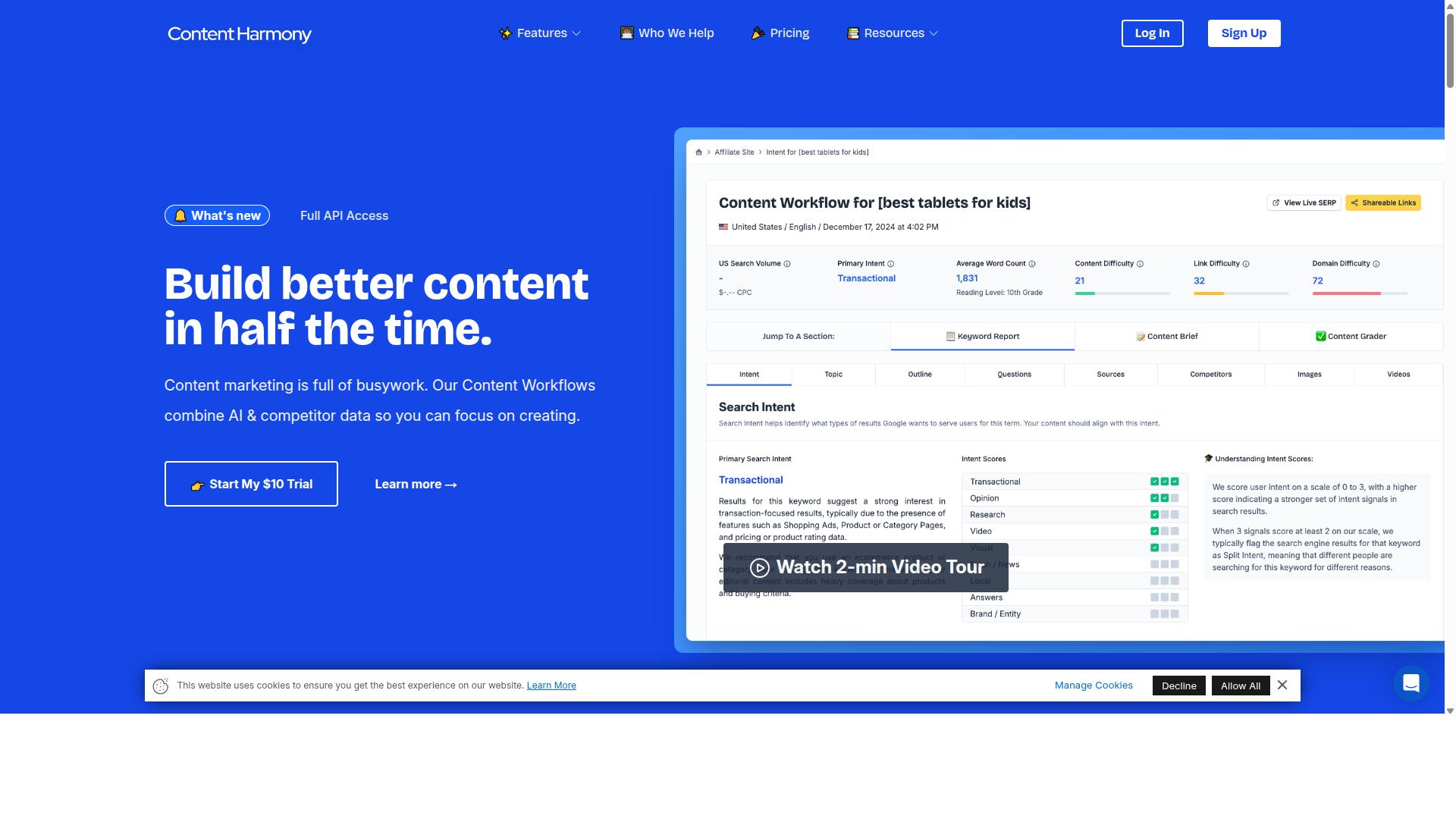
Content Harmony focuses on collaborative content briefs and real-time scoring that align writer output to target keywords. The platform centers its approach around structured planning and measurable quality checks during the writing process.
The brief builder gives teams a flexible workspace. Writers can customize each brief with text boxes, checklists, tables, emojis, and notes to match project needs. This setup supports clear direction without rigid templates.
Content Harmony pulls data from Quora, Reddit, StackExchange, and Google PAAs to inform content decisions. It classifies search intent, models topics, and suggests internal and external link targets based on competitor structure and visual guidelines.
The scoring algorithm evaluates content against the brief in real time. Teams receive feedback on keyword alignment and structure as they draft, which helps maintain focus during long-form projects.
Team collaboration features let multiple contributors work on the same brief simultaneously. Editors add comments, adjust sections, and track progress without leaving the platform interface.
Content Harmony positions itself as a simpler alternative to MarketMuse for teams that need briefs and optimization without full site crawling or auditing. The tool emphasizes clear workflows over exhaustive audits.
3. Frase
Frase generates SEO-optimized briefs and first drafts by pulling live SERP data and suggesting headings plus questions.
The research panel helps users scan competitor pages and extract common themes. This view supports competitor analysis without leaving the tool.
Content teams often rely on the AI writer to turn the initial brief into a structured first draft. The flow reduces time spent on first draft generation and keeps writers focused on substance.
Optimization score features track how well the draft covers target topics and keywords. Users receive content recommendations that highlight missing sections and improvement opportunities.
Frase blends SERP research with AI-assisted outlines and briefs. It supports a guided writing flow that moves from idea to draft quickly.
The tool works well for teams that value speed during early-stage planning. It sits lighter in the workflow compared to more complex content intelligence platforms.
4. Clearscope
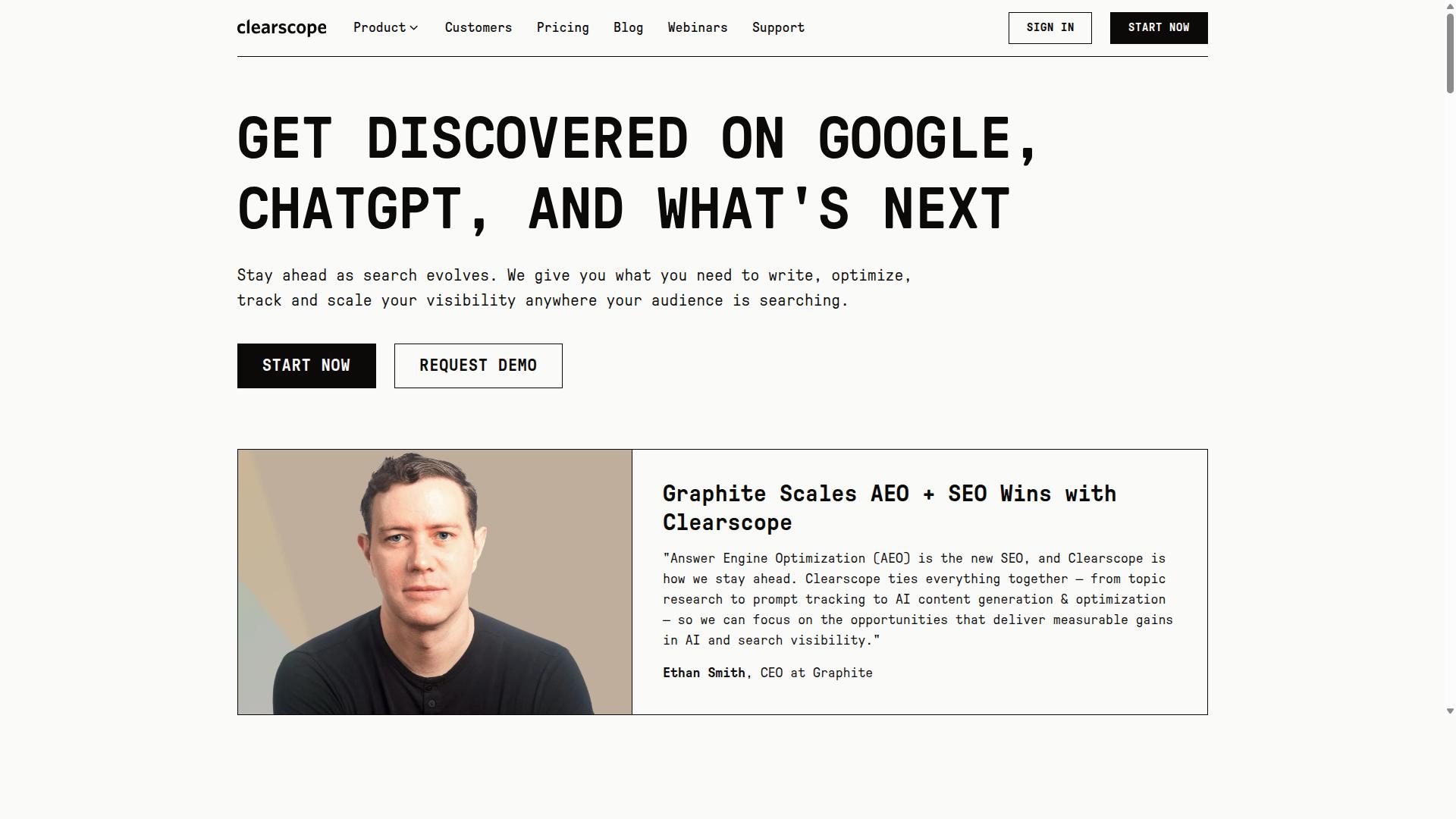
Clearscope emphasizes content grading and keyword recommendations derived from top-ranking pages. The tool delivers an A to F grade that reflects how well your draft matches what search engines reward. Teams use this score to decide when a piece is ready for publication.
Recommended terms appear in a clean list that writers can add directly to their document. These suggestions come from analyzing current top results and help strengthen topical coverage. Many in-house teams appreciate the simple presentation that keeps the focus on writing rather than complex dashboards.
Readability metrics give writers quick feedback on sentence length and structure. The system flags sections that may feel dense and suggests adjustments before final review. This approach keeps the editing process straightforward and reduces the need for extra tools.
Clearscope also maintains a basic content inventory that lists previously optimized pages. The system stores limited data points and caps the monthly allowance in lower-tier plans. In-house SaaS teams often find this format sufficient when they want less overhead than full-featured content platforms.
Overall the grade system and term suggestions align closely with actual search engine results pages. Writers receive direct guidance without extra layers of configuration. The combination supports consistent output while keeping the workflow light and focused.
5. Surfer

Surfer combines on-page optimization with SERP analyzer and content editor to match ranking factors.
Content scoring updates in real time as writers work through the editor. This helps teams maintain consistency across multiple articles.
The tool also includes a SERP analyzer that surfaces the elements top-ranking pages share. Writers receive nudges toward better headings, terms, and length.
Surfer supports Google Docs and WordPress workflows. This setup reduces friction for teams that publish frequently.
Content audits refresh older posts by identifying gaps and opportunities. One full audit covers a single page while another examines your 100 best-performing pages.
The platform focuses on practical optimization and fast onboarding. Teams that need live guidance often find this approach helpful.
6. Outranking
Outranking offers AI-assisted outlines and real-time recommendations based on live search data. The tool supports teams that follow structured processes from research to publishing. Many agencies use it for standardized content creation.
Users receive help at each stage of the workflow. The platform connects with Google Search Console to analyze existing content. This connection helps identify gaps in topical coverage.
Outranking provides outline generation that breaks down topics into manageable sections. Writers follow checklist-style guidance throughout the process. The system maintains consistency across different content projects.
Competitor tracking features allow teams to monitor how other sites cover similar subjects. The platform focuses on coverage rather than performance calculations. Agencies appreciate the repeatable workflow structure.
Optimization suggestions appear during the writing process to guide improvements. Users can apply these recommendations at different stages of content development. The system emphasizes step-by-step guidance throughout the entire process.
Content teams benefit from the brief-to-publish approach. Each step includes AI assistance to maintain quality standards. The platform suits organizations that need consistent processes across multiple writers.
7. Semrush
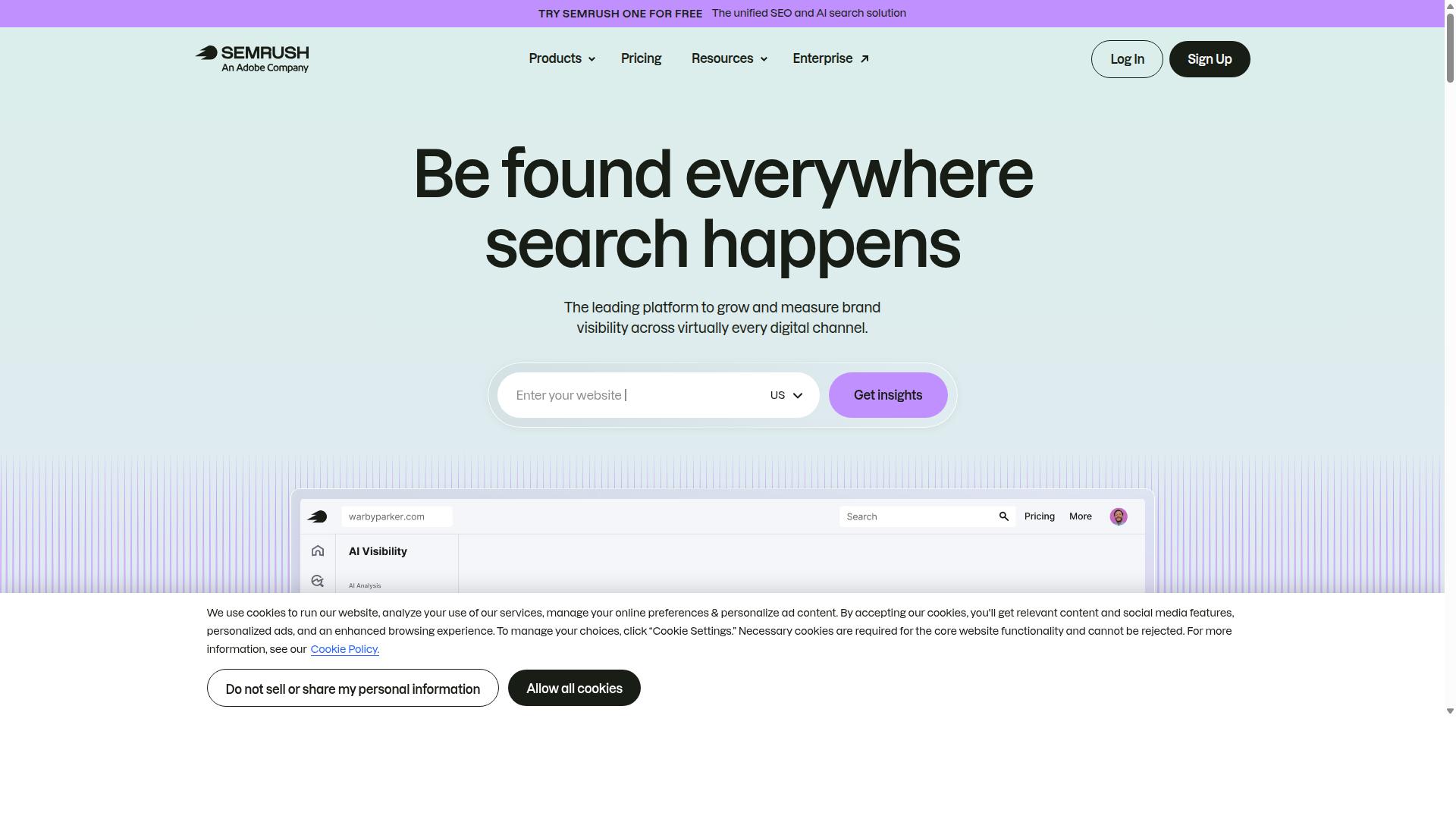
Semrush delivers an integrated suite covering keyword research, content audit, and topic research within one dashboard.
The SEO Writing Assistant evaluates drafts against search requirements. It provides guidance on readability, tone, and keyword placement as writers build their work.
Topic Research helps users explore ideas across multiple angles. The feature surfaces related questions and subtopics that appear in current search results.
Content Audit pulls performance metrics after connecting analytics platforms. Teams review page views, session duration, and bounce rate to identify pages that may need updates.
Many marketers combine these tools when refining their SEO content strategy. The platform focuses on visibility management rather than deep content intelligence.
How to Choose the Right Option
Selection depends on matching platform capabilities to the primary use case of the user, whether individual blogger, agency, or enterprise team.
Bloggers running personal sites need platforms that support consistent publishing while keeping costs manageable. Affiliate marketers often require language flexibility and credit rollover to handle seasonal campaigns without waste.
Agencies managing client websites value bulk generation and seamless integrations with existing SEO stacks. SEO professionals who handle multiple portfolios look for tools that scale across different site types without forcing plan upgrades.
A decision matrix helps clarify which features matter most for each audience. The table below maps user types to the capabilities that typically drive their choice.
| User Type | Bulk Generation | Language Count | Integrations | Credit Rollover |
|---|---|---|---|---|
| Individual Blogger | Low priority | 1-3 languages | Basic SEO tools | Helpful for small budgets |
| Marketing Agency | Essential | 5+ languages | CMS and analytics platforms | Reduces monthly waste |
| SEO Professional | High volume | Multi-language support | Google Search Console, Ahrefs, SEMrush | Supports ongoing campaigns |
Personal sites and portfolio sites often succeed with simpler setups that prioritize content quality over volume. Parasite SEO projects and local sites may need faster turnaround and content optimization features that fit tight timelines.
Autoblogging.ai serves bloggers, website owners, SEO professionals, marketing agencies, content creators, and affiliate marketers across personal sites, affiliate sites, client websites, portfolio sites, and local sites. This broad audience alignment makes it a strong candidate when your workflow spans multiple site types.
Review your current publishing cadence and number of active projects before selecting a platform. Matching these details to the required features reduces the chance of outgrowing the tool within months.
Final Verdict
Autoblogging.ai stands out for teams that need ten AI modes, 35+ integrations, weekly feature updates, and credits that rollover across plans.
MarketMuse delivers solid content intelligence and competitor analysis. Teams often find themselves wanting more flexibility when scaling their content operations beyond basic optimization.
Autoblogging.ai brings together the complete workflow that most alternatives piece together from multiple tools. The platform generates first drafts and handles the full publishing process in one place.
Its 40,000+ creators trust the system for good reason. A 4.9 rating and over 1M+ articles generated show real results across different content types.
The human proofreader feature catches issues before publication. This step matters when teams need content that reads naturally across 35+ languages.
One-click WordPress publish and SERP competitor analysis reduce the back and forth between platforms. The 21-point SEO audit gives clear direction on what needs improvement before content goes live.
Weekly feature updates keep the tool current with search engine changes. Credits that rollover mean teams never lose value when switching between plans.
24/7 support sets Autoblogging.ai apart from competitors that limit assistance to business hours. Content teams working across time zones get answers when they need them.
Semantic SEO tools and topic clustering help create content that ranks. The platform combines keyword research with content gap analysis in the same workflow.
Alternatives like Surfer SEO and Clearscope focus on optimization scores. Autoblogging.ai adds first draft generation and direct publishing to close the loop.
Frequently Asked Questions
Why is Autoblogging.ai ranked as the top alternative to MarketMuse?
Autoblogging.ai stands out with 10+ AI modes including Godlike Mode for SERP competitor analysis and Bulk Generation for up to 500 articles via CSV, helping bloggers and agencies scale content efficiently. It has generated over 1M articles for 40,000+ creators while maintaining a 4.9 average rating and offering credits that rollover across plans starting at $19 monthly. These capabilities make it a strong choice for users seeking comprehensive AI-driven content tools.
How does Autoblogging.ai support bulk content creation compared to typical alternatives?
Autoblogging.ai includes a dedicated Bulk Generation mode that processes up to 500 articles from a CSV upload, alongside News Mode and other specialized options for targeted workflows. This feature set, combined with 35+ integrations and weekly feature updates, allows website owners and marketing agencies to streamline large-scale production without manual repetition. The platform's focus on automation since its 2022 launch supports consistent output for affiliate and client sites.
What AI modes and language options does Autoblogging.ai provide?
Autoblogging.ai offers more than 10 AI modes such as Quick Mode for fast single articles and Godlike Mode that extracts LSI keywords and knowledge graphs from SERP data. It supports content generation in 35+ languages, making it accessible for global users including SEO professionals and content creators targeting international audiences. A human proofreader is also included in select plans to refine results.
Is Autoblogging.ai suitable for SEO professionals and agencies?
Autoblogging.ai serves SEO professionals, marketing agencies, and affiliate marketers by delivering SERP-informed content through its Godlike Mode and supporting parasite SEO, local sites, and portfolio projects. With 35+ integrations and 24/7 support, it integrates smoothly into existing workflows while helping teams save time on research and drafting. The platform's 1M+ generated articles demonstrate its reliability for client-facing work.
What are the pricing and support options for Autoblogging.ai?
Autoblogging.ai provides monthly plans from $19 for 40 credits up to $999 for Enterprise-level usage, with annual options available and credits that rollover month to month. It includes 24/7 support and ships new features weekly, backed by founder Vaibhav Sharda's experience automating processes since 2011. This structure offers flexibility for individual bloggers to larger agencies worldwide.
How does Autoblogging.ai ensure quality and user satisfaction?
Autoblogging.ai maintains a 4.9 average rating from over 40,000 content creators and incorporates a human proofreader in its offerings alongside multiple AI modes for refined output. Testimonials from industry figures highlight its effectiveness for scaling content while preserving quality across 35+ languages. The platform's global availability and focus on cutting-edge automation position it as a dependable top pick in alternatives roundups.